CHEIL GERMANY
JÄGERMEISTER
COOLPACK
JÄGERMEISTER
COOLPACK
Best At -18°C
client
CHEIL Germany
CHEIL Germany
role
INDUSTRIAL DESIGN
TECHNICAL REALIZATION
Overview
Overview
From Vision to Production:
Engineering the Jägermeister Coolpack
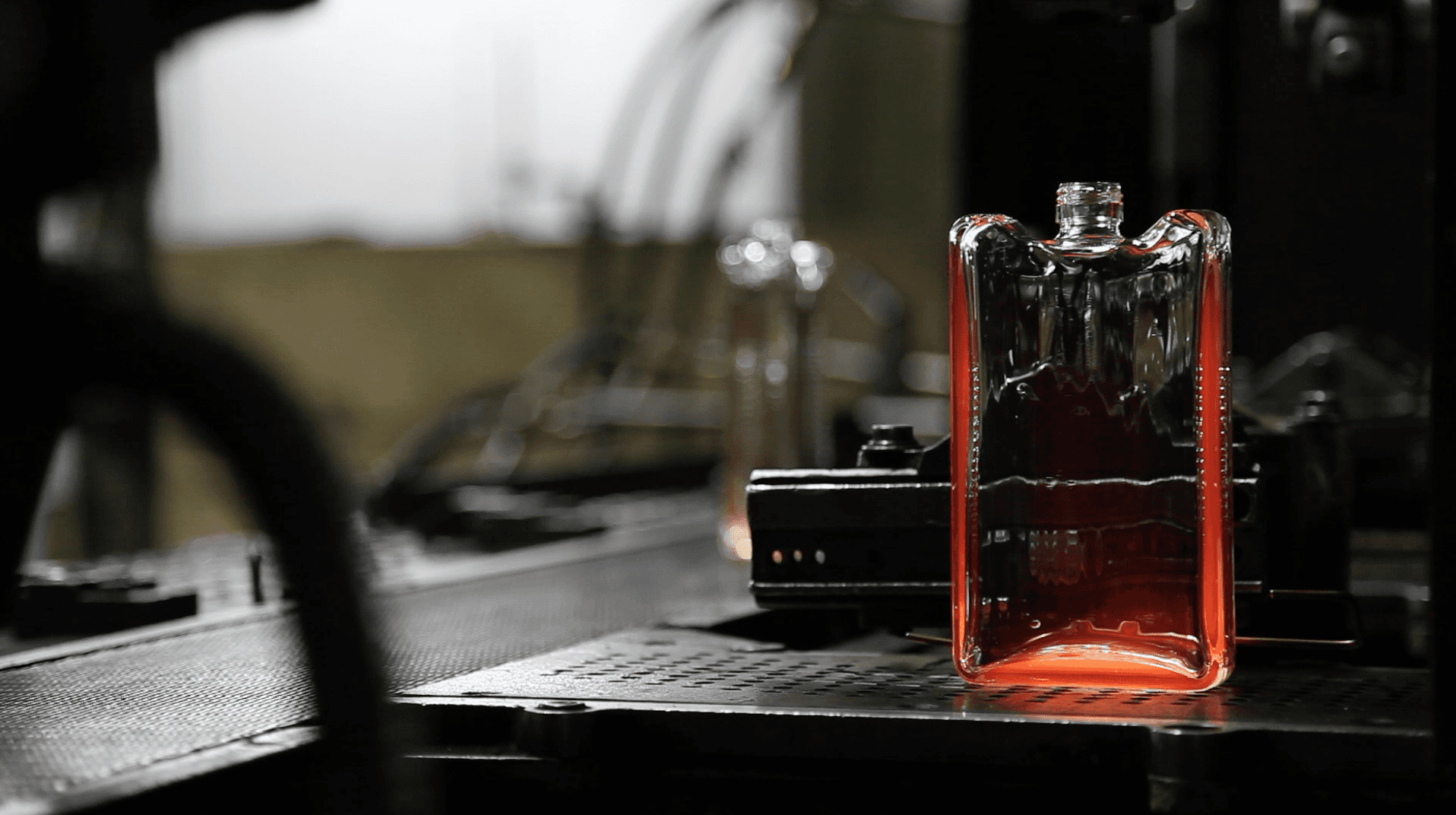
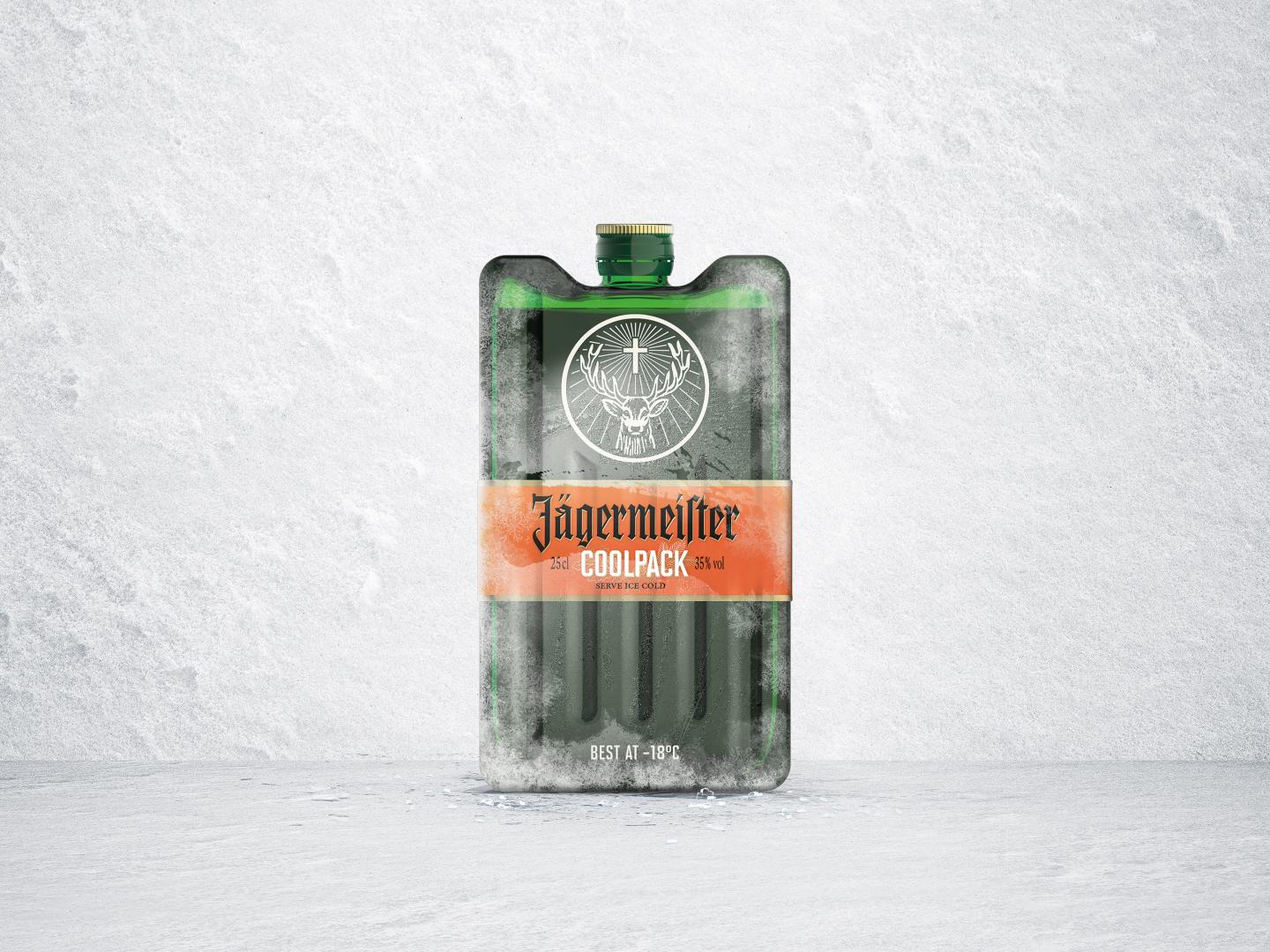
The Jägermeister Coolpack is a masterclass in blending iconic branding with functional engineering. While the creative concept originated with Cheil, the project underwent a fascinating evolution. It began as a high-end marketing award case made of glass, but its potential was so clear that Jägermeister decided to transform it into a retail product. To ensure consumer safety and versatility for festival environments and outdoor events, the final version was transitioned into a shatterproof, high-quality plastic, allowing the brand to go where glass is often prohibited.
The Jägermeister Coolpack is a masterclass in blending iconic branding with functional engineering. While the creative concept originated with Cheil, the project underwent a fascinating evolution. It began as a high-end marketing award case made of glass, but its potential was so clear that Jägermeister decided to transform it into a retail product. To ensure consumer safety and versatility for festival environments and outdoor events, the final version was transitioned into a shatterproof, high-quality plastic, allowing the brand to go where glass is often prohibited.
Our Contribution
Our Contribution
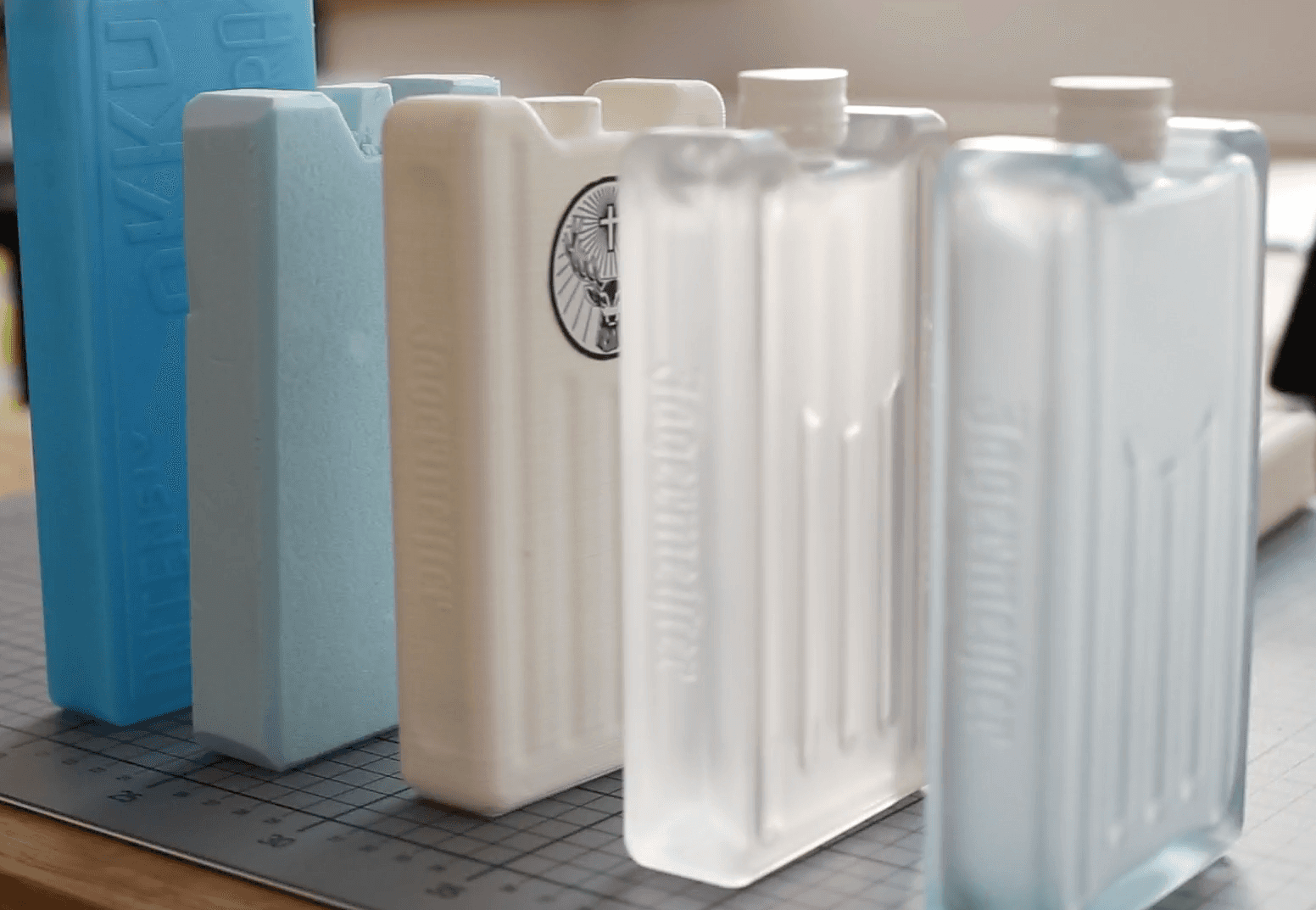
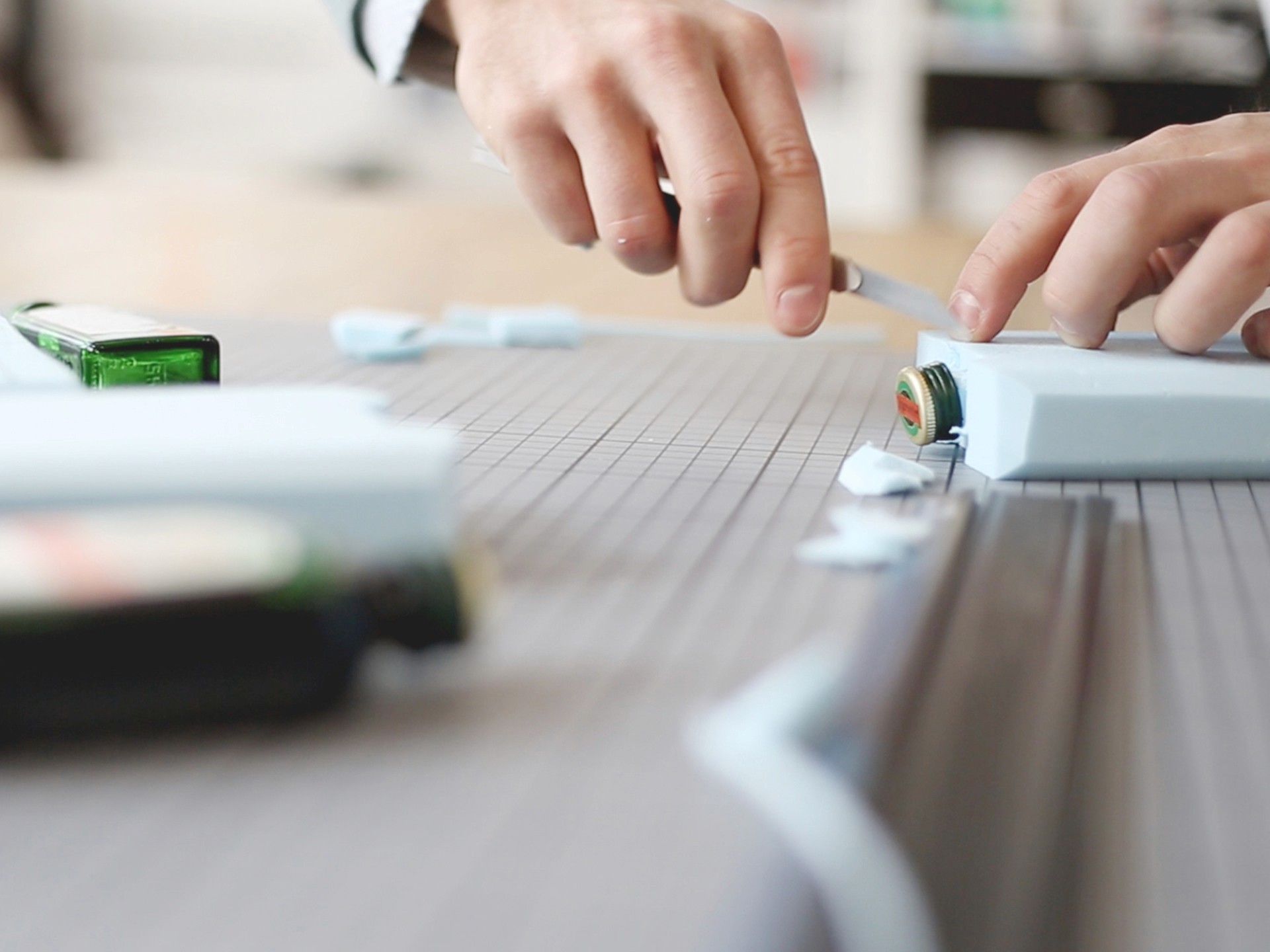
Our responsibility was to bridge the gap between that bold creative vision and a technically feasible reality. We guided the project through a rigorous and iterative development process, starting with rough 3D prints to test the physical presence, scale, and ergonomics of the shape. To ensure the highest aesthetic quality, we then advanced to producing highly detailed, transparent sintered parts. This crucial step allowed us to precisely analyze how light would refract through the material and how the liquid would visually interact with the unique, structured contours of the bottle.
Our responsibility was to bridge the gap between that bold creative vision and a technically feasible reality. We guided the project through a rigorous and iterative development process, starting with rough 3D prints to test the physical presence, scale, and ergonomics of the shape. To ensure the highest aesthetic quality, we then advanced to producing highly detailed, transparent sintered parts. This crucial step allowed us to precisely analyze how light would refract through the material and how the liquid would visually interact with the unique, structured contours of the bottle.
Design Details
Design Details
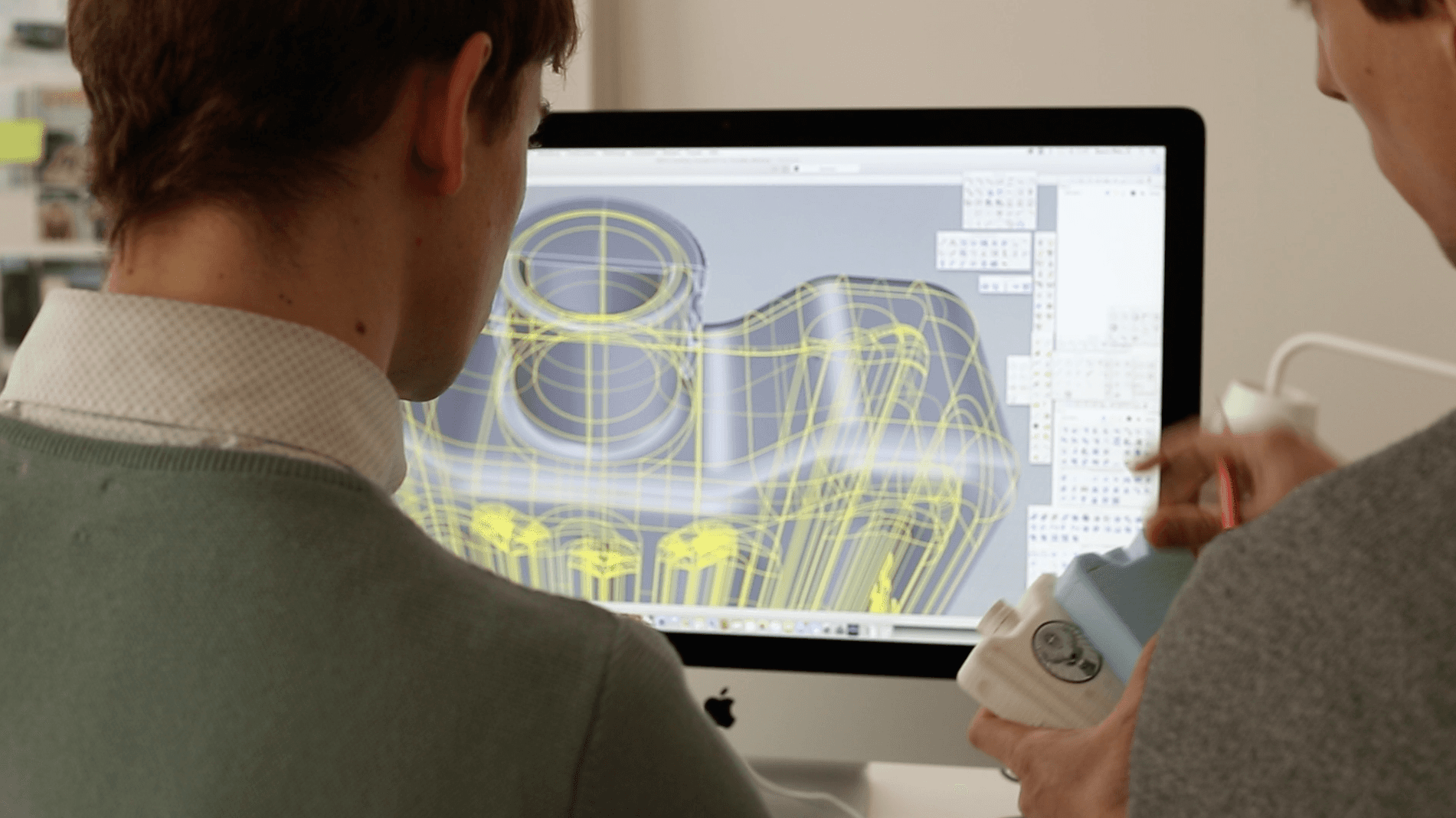
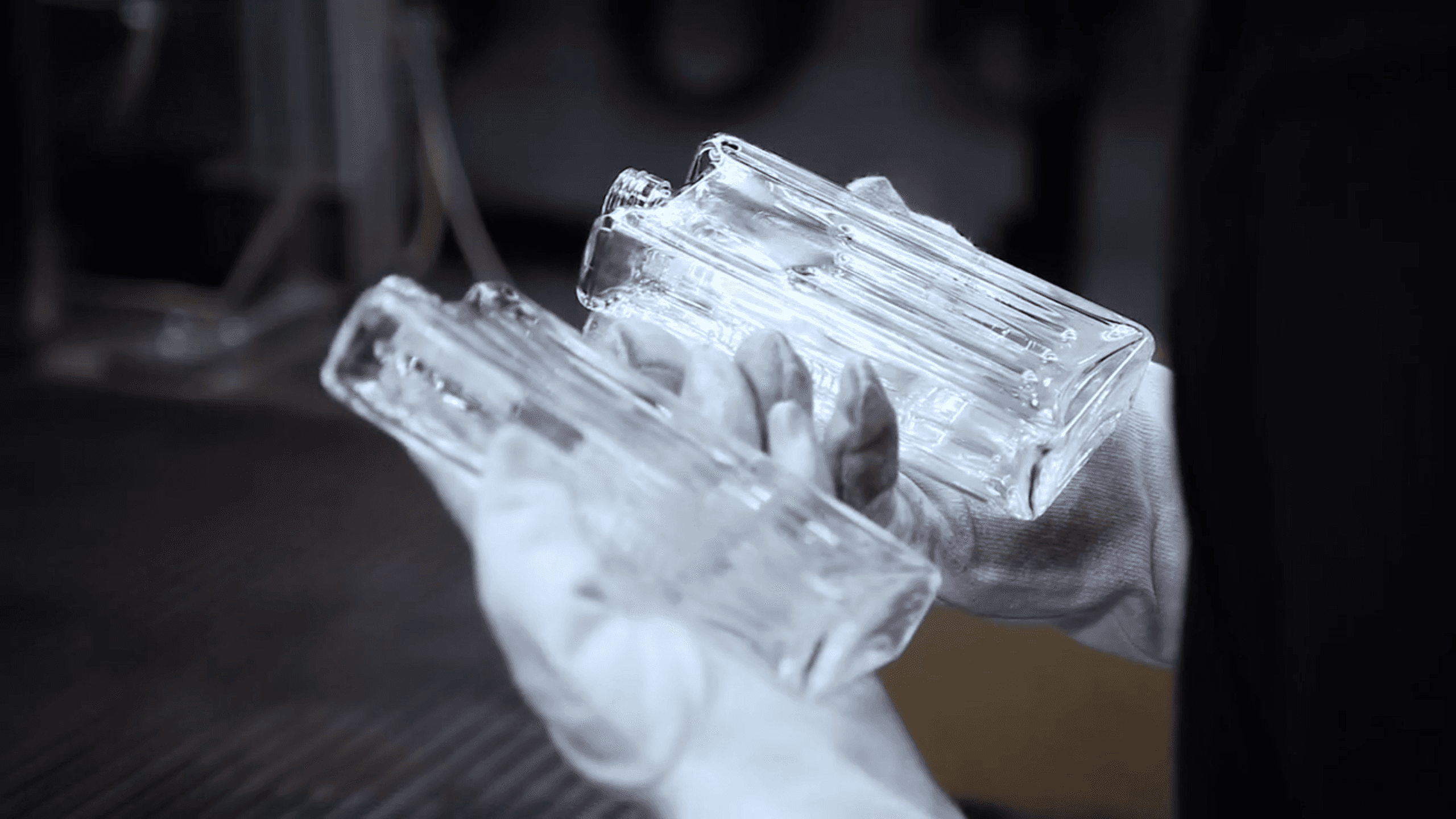
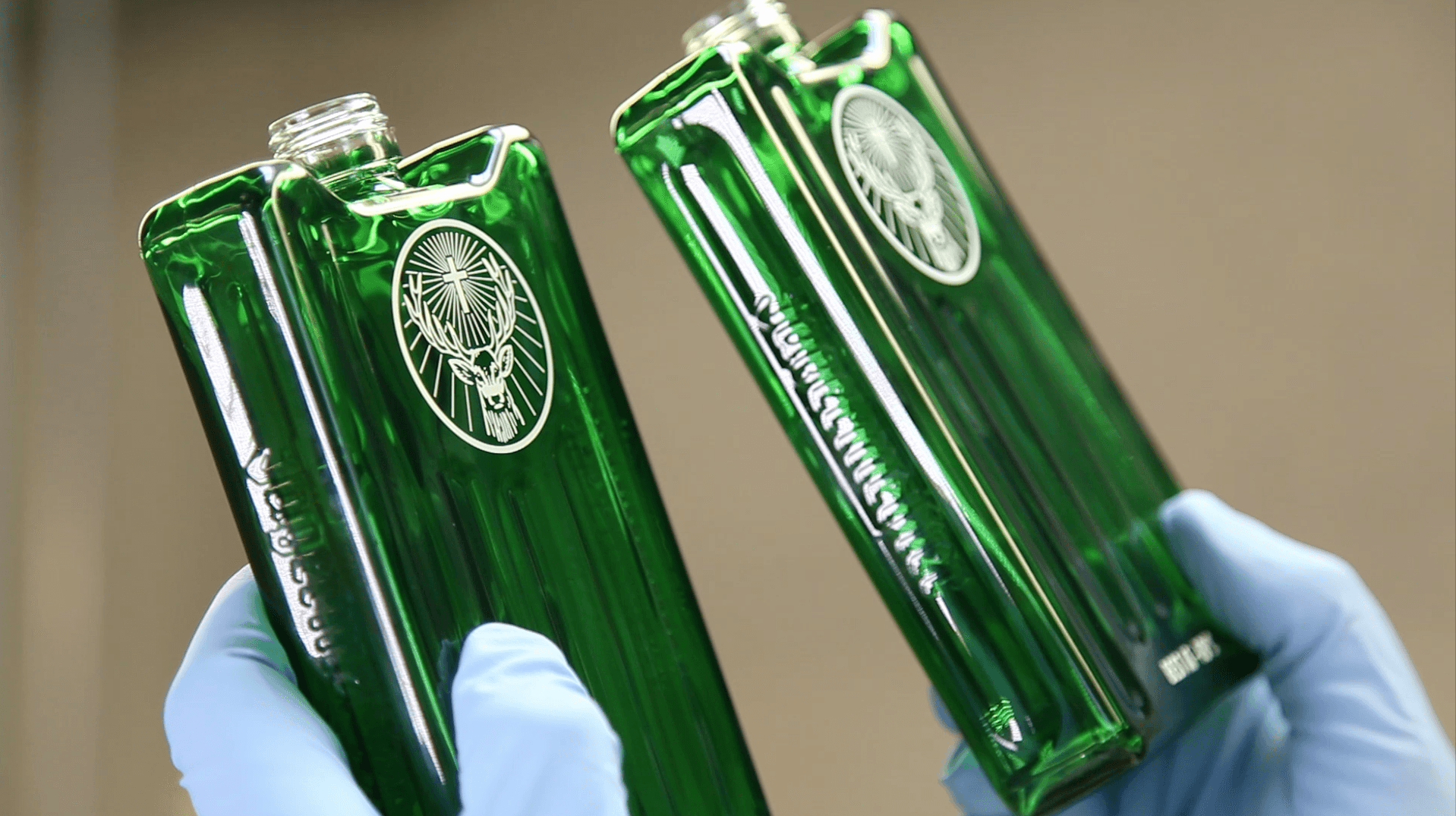
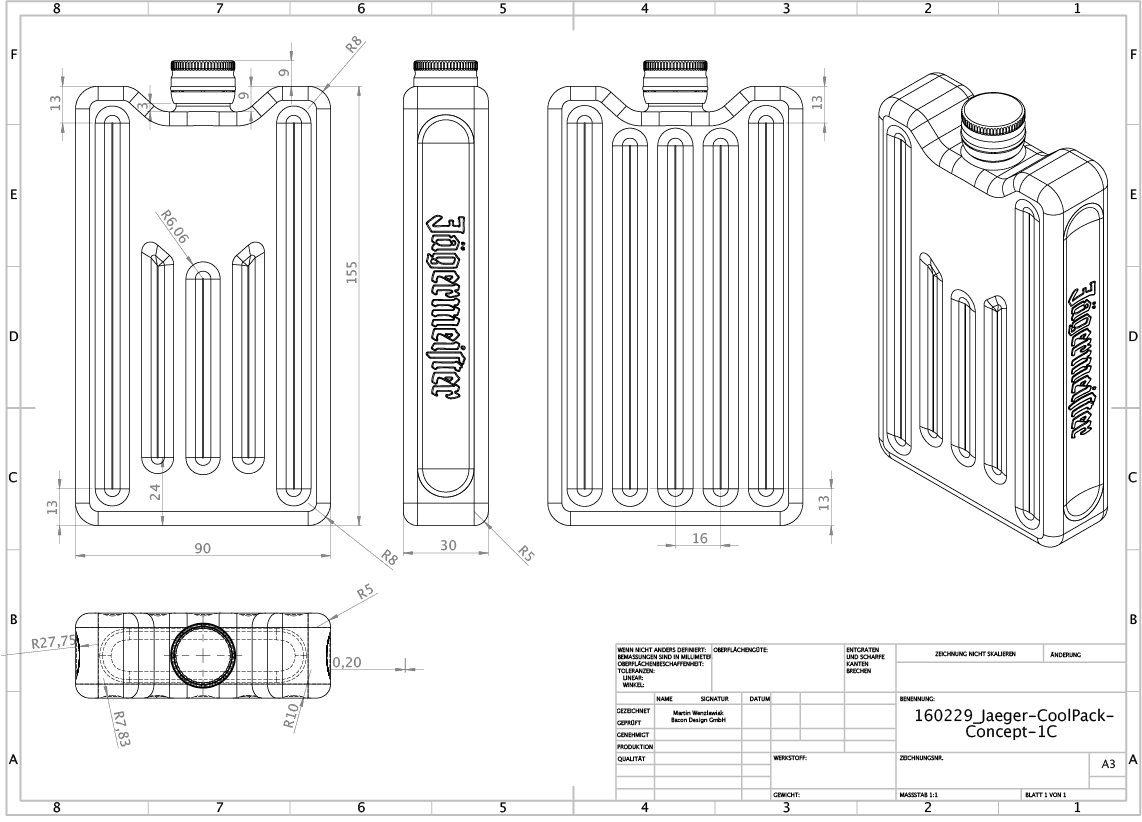
Transforming the conceptual design into a physical glass object required meticulous technical optimization. Over the course of many CAD iterations, we carefully adjusted the overarching forms and specific radii to ensure the design was fully optimized for the complexities of glass manufacturing. A key functional element we refined was the signature ribbed structure. These grooves not only perfectly mimic the look of a real coolpack, but they also significantly increase the surface area of the vessel, allowing the liquid inside to cool down much faster. We ultimately delivered a precise Design for Manufacturing that balanced these sharp, distinctive lines and functional features with the strict structural requirements, draft angles, and tolerances demanded by the glass manufacturer.
Transforming the conceptual design into a physical glass object required meticulous technical optimization. Over the course of many CAD iterations, we carefully adjusted the overarching forms and specific radii to ensure the design was fully optimized for the complexities of glass manufacturing. A key functional element we refined was the signature ribbed structure. These grooves not only perfectly mimic the look of a real coolpack, but they also significantly increase the surface area of the vessel, allowing the liquid inside to cool down much faster. We ultimately delivered a precise Design for Manufacturing that balanced these sharp, distinctive lines and functional features with the strict structural requirements, draft angles, and tolerances demanded by the glass manufacturer.